§ Power generation · Grid · Refining · Renewables

Industrial AI for energy and utilities.

Energy operators generate enormous volumes of time-series data from turbines, generators, grid sensors and refineries, yet most of it is never used to predict failures, optimize dispatch or reduce emissions. Industrial AI Experts connects energy companies with senior practitioners who have deployed AI in power plants, refineries and renewable fleets — not analysts who studied the sector, but engineers who have integrated models with SCADA, historians and DCS in live operations.

Tell us what you need. Within 48 h we propose the experts who fit.

Two or three profiles from our network, with availability and indicative terms. No cost, no commitment.

I'm looking for

Thank you. We will match your brief against the network and propose two or three experts within 48 business hours. All conversations are confidential.

Profiles are shared confidentially with you. If nobody in the network fits, we will say so just as quickly. More detail to share? Complete the full brief →

We cover conventional power generation, transmission and distribution, oil and gas refining, and renewable energy operators. Tell us your challenge and within 48 hours we propose two or three experts with experience in energy operations, including availability and indicative terms.

ForPower generators, grid operators, refiners, renewable operators
FormatsBoard · Project · Architecture · Due diligence
ResponseA shortlist of experts within 48 h
01 Processes and operational challenges

Where AI meets energy operations.

01

Power generation equipment health

Gas turbines, steam turbines, generators, boilers and compressors are monitored by thousands of sensors. Failures are rare but catastrophic. Detecting early degradation patterns in vibration, temperature and emission data is a natural fit for anomaly detection and predictive models.

02

Grid optimization and load forecasting

Transmission and distribution operators must balance intermittent renewable injection, demand spikes and congestion. Short-term load forecasting, dynamic line rating and topology optimization are problems where machine learning consistently outperforms traditional heuristics.

03

Refinery and petrochemical operations

Crude distillation units, catalytic crackers and hydrocrackers run in a narrow efficiency window. Small set-point improvements translate to large margin gains. AI can model unit behaviour under varying feedstock and recommend optimal operating envelopes.

04

Renewable generation forecasting

Wind and solar output depend on weather conditions that change within minutes. Accurate ultra-short-term and day-ahead forecasting reduces imbalance costs, curtailment and storage sizing requirements across the renewable fleet.

02 Systems and data sources

What energy operators already have.

SystemWhat it holdsRelevance for AI
SCADA / DCS (e.g. Siemens SPPA, Emerson Ovation, ABB Symphony)Real-time sensor telemetry: temperature, pressure, flow, vibration, emissions.Primary data source for anomaly detection, predictive maintenance and process optimization models.
Historian (OSIsoft PI, GE Proficy, Honeywell PHD)Time-series archive of every sensor tag, often years of data at second-level resolution.The training dataset. Without historian access, most energy AI use cases cannot start.
CMMS / EAM (SAP PM, IBM Maximo, Infor)Maintenance work orders, failure codes, spare-parts history, outage reports.Provides the labels: what failed, when, and what was done. Essential for supervised learning in predictive maintenance.
EMS / SCADA-AGC (Energy Management System)Generation dispatch, load data, interchange schedules, frequency control logs.Input for grid optimization and load forecasting models.
ERP (SAP, Oracle)Fuel procurement, energy trading positions, inventory, cost accounting.Connects AI insights to financial impact — optimizing for margin, not just for equipment health.
Meteorological / external feedsNumerical weather prediction, irradiance, wind-speed forecasts, market prices.External features for renewable forecasting and dispatch optimization.
03 Conceptual AI use case categories

Where AI creates value in energy — conceptual examples.

These are conceptual categories, not a description of any specific engagement. Each one illustrates the type of problem where AI is technically viable in energy operations, provided the data and operational context support it.

01

Predictive maintenance of rotating equipment

Conceptual example: A model trained on historian vibration and temperature data from a fleet of gas turbines flags degradation weeks before the CMS threshold fires, allowing a planned outage instead of a forced one.

02

Process optimization for refining units

Conceptual example: A reinforcement-learning or surrogate-model approach recommends set-point adjustments on a crude distillation unit to maximize yield under varying feedstock composition, within safety constraints.

03

Renewable generation forecasting

Conceptual example: A hybrid model combining numerical weather prediction with site-level SCADA data produces 15-minute-ahead wind power forecasts that reduce imbalance penalties in the day-ahead and intraday markets.

04

Emissions monitoring and compliance

Conceptual example: Continuous emissions monitoring data, combined with process conditions, is modelled to predict exceedance events before they occur, allowing operators to adjust combustion parameters proactively.

04 Sector constraints and readiness

Safety, regulation, availability — and when an initiative is ready.

Energy is a safety-critical, heavily regulated sector. AI initiatives must respect constraints that do not apply in lighter industries, and the decision to move forward should be grounded in a realistic assessment of data, infrastructure and operational readiness.

Sector-specific constraints

  • Functional safety: AI must not bypass safety instrumented systems (SIS). IEC 61511 requires separation between control and safety layers. AI recommendations are advisory unless a qualified safety case is made.
  • Grid reliability standards: Transmission operators operate under mandatory reliability rules (e.g. NERC, ENTSO-E codes). Any AI-driven dispatch or topology action must comply with these frameworks.
  • Environmental compliance: Refineries and power plants report emissions under regulatory regimes (EU IED, US EPA, local permits). AI models that influence combustion or process parameters must not create compliance risk.
  • Availability requirements: Generation assets have availability targets above 95%. AI initiatives that require equipment downtime or control-system modifications during commissioning must be planned within maintenance windows.
  • OT/IT separation: Many energy sites maintain an air gap between operational technology and corporate IT. Data connectivity for AI must respect network segmentation and cybersecurity standards (IEC 62443).

When an energy AI initiative is ready to execute

  • There is a named asset or process with a measurable operational problem (unplanned outages, yield loss, forecasting error, emissions risk).
  • Historian data is available for at least 6–12 months, covering both normal and fault conditions, with sensor tags documented.
  • Maintenance or operational logs (CMMS/EAM) exist and can be correlated with sensor data to label events.
  • The OT team has agreed to a read-only data extraction path that respects network segmentation.
  • There is an internal sponsor with budget authority and a clear target metric (e.g. reduce forced outages by X%, improve forecast accuracy by Y%).

Type of professional support needed

  • Board and strategic advisory: For energy executives defining an AI roadmap aligned with decarbonization, asset integrity and market strategy.
  • Project leadership: For deploying predictive maintenance or forecasting systems end-to-end, from data pipeline through model deployment to operator adoption.
  • Architecture: For designing the OT/IT data integration, historian connectivity, edge vs cloud placement and cybersecurity compliance.
  • Due diligence: For evaluating AI vendors and platforms before procurement, ensuring claims are validated against the operator's actual data and infrastructure.

Explore the related services: industrial AI consulting, project leadership, due diligence, board advisory, forward-deployed experts. See also the industrial AI roadmap guide and the architecture guide for MES, SCADA, edge and generative AI.
05 Frequently asked questions

About industrial AI in energy.

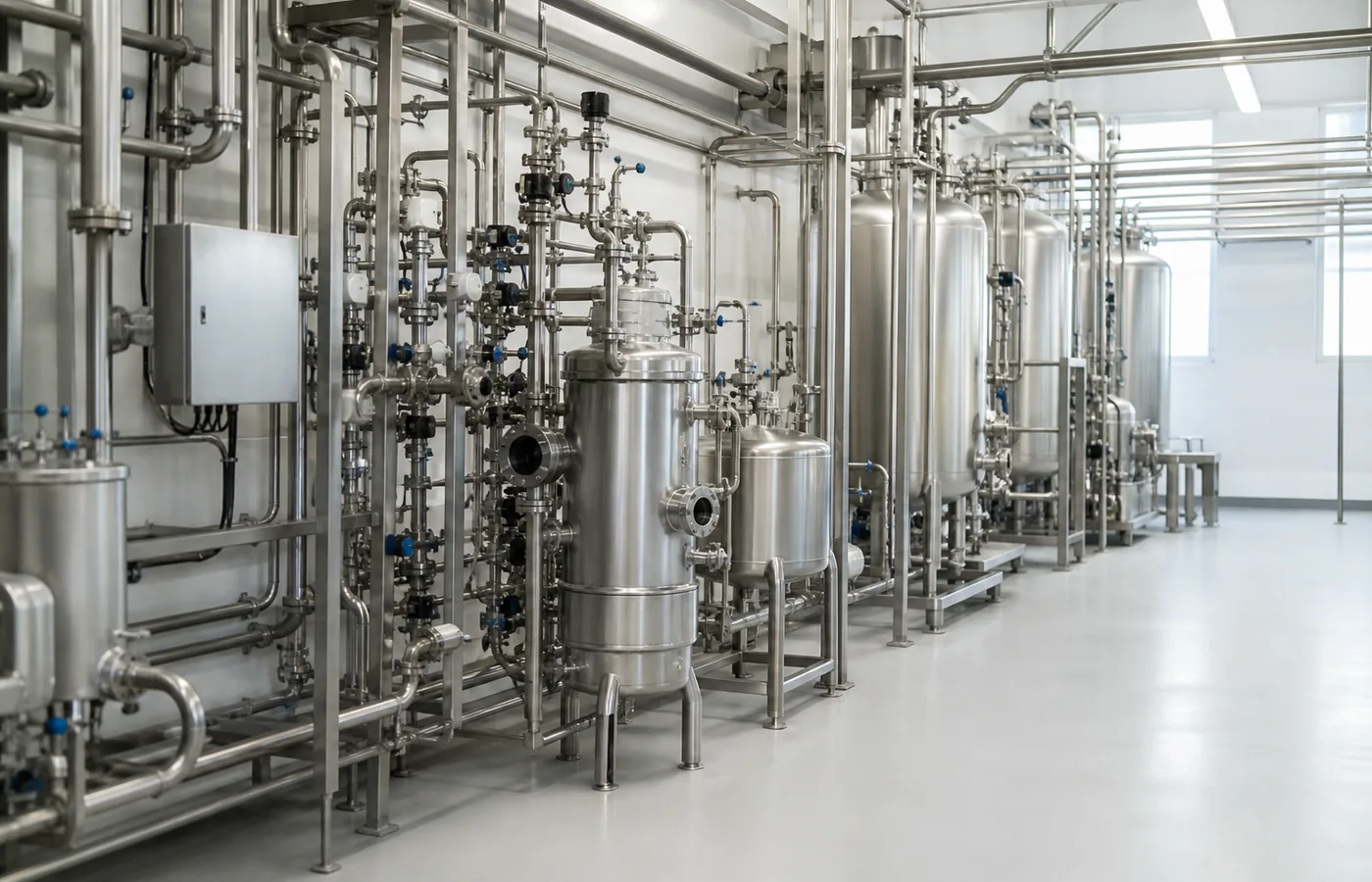
Energy plant control room with operators monitoring turbine and grid dashboards.
Where does AI deliver the fastest value in energy operations?

Predictive maintenance of rotating equipment — gas turbines, steam turbines, generators and pumps — is typically the fastest path to ROI, because an unplanned outage has a direct and measurable cost. Grid load forecasting and renewable generation forecasting are also high-impact starting points.

Can AI be deployed without replacing our SCADA or DCS systems?

Yes. Most industrial AI use cases read data from existing historians and SCADA through read-only connectors. The AI layer sits on top of the control infrastructure; it does not replace the DCS or SCADA but consumes their data and returns recommendations or alerts through existing interfaces.

How do you handle safety-critical systems in an energy plant?

AI recommendations are advisory by default and do not directly write to safety instrumented systems. A human operator reviews and approves every action in safety-critical loops. The architecture must respect functional safety standards such as IEC 61511 and the separation between control and safety layers.

What data do we need before starting an energy AI initiative?

You need time-series data from sensors on the target equipment (vibration, temperature, pressure, flow), stored in a historian with enough history to capture both normal and fault conditions. Maintenance logs from your CMMS and operational data from MES or SCADA complete the picture. Six to twelve months of clean data is a typical minimum.

Do you work with renewable energy operators as well as conventional power?

Yes. Wind, solar and hydro operators face forecasting, asset health and curtailment optimization challenges that are well suited to AI. Refinery and petrochemical operators are also within scope. The key is having a concrete operational problem and enough data to address it.

06 Request experts

Tell us where you stand.

Your sector, your challenge and the stage of the project. That is enough for us to prepare the proposal.

I would rather send a detailed brief

Tell us what you need. Within 48 h we propose the experts who fit.

Two or three profiles from our network, with availability and indicative terms. No cost, no commitment.

I'm looking for

Thank you. We will match your brief against the network and propose two or three experts within 48 business hours. All conversations are confidential.

Profiles are shared confidentially with you. If nobody in the network fits, we will say so just as quickly. More detail to share? Complete the full brief →